Recruiters
Get the fast read on fit, project depth, and how I think about frontend product work.
I build practical web apps with clean React interfaces, thoughtful user flows, and real project context: sports insights, marketplace booking, and AI-assisted health tracking.
The AI assistant acts as a grounded portfolio guide for recruiters, clients, and anyone allergic to opening six tabs just to answer one question.
This assistant answers from my portfolio, project notes, and resume context. It is concise, grounded, and lightly dry when the room allows it.
Best for recruiter diligence, project context, fit checks, and the occasional curveball that still deserves a useful answer.
What you will get
A concise answer grounded in actual site context. Helpful first, lightly witty when the moment allows, and professionally allergic to making things up.
Recruiters get a quick fit check. Clients get signal on product judgment and execution. Collaborators get a sense of how I work, not just what stack I used.
Recruiters
Get the fast read on fit, project depth, and how I think about frontend product work.
Clients
See how I approach useful workflows, clear execution, and the details that make software feel trustworthy.
Collaborators
Understand my working style, what I care about, and where I add the most value on a team.
Curious visitors
Ask the practical question, the unexpected one, or both. The assistant has range. Within reason.
Start with the three projects that best show practical AI integration, user workflow thinking, and deployed frontend work.
AI sports dashboard
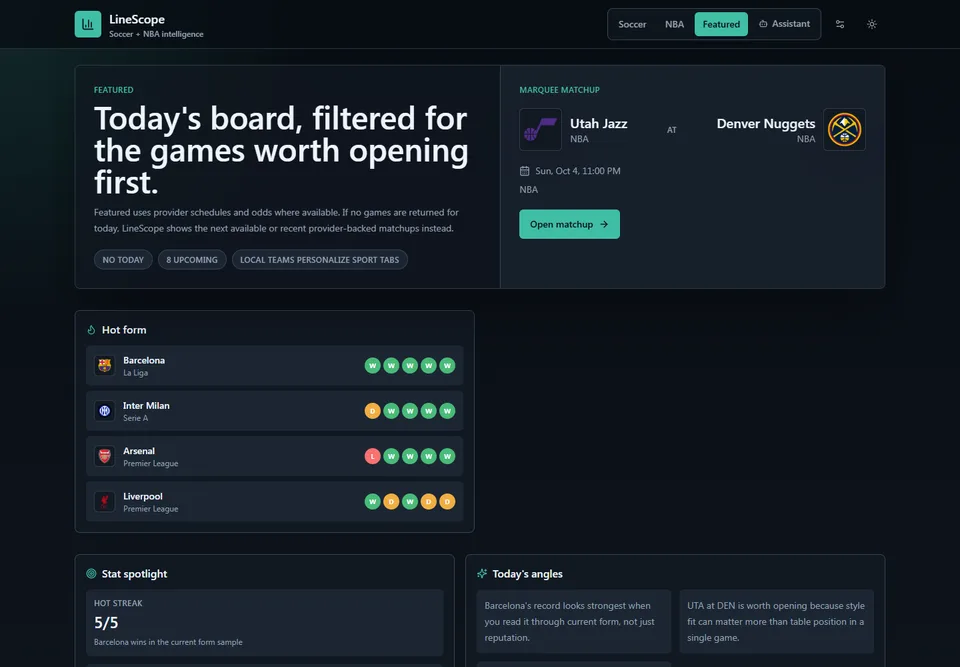
A sports intelligence dashboard focused on Soccer and NBA, with team pages, featured games, logos and badges, local favorites, and an OpenAI-powered assistant that can stay locked to team context.
Why it matters
Shows product thinking around sports API limitations, fallback design, data normalization, dashboard UX, and AI assistance built around imperfect third-party data.
Marketplace platform
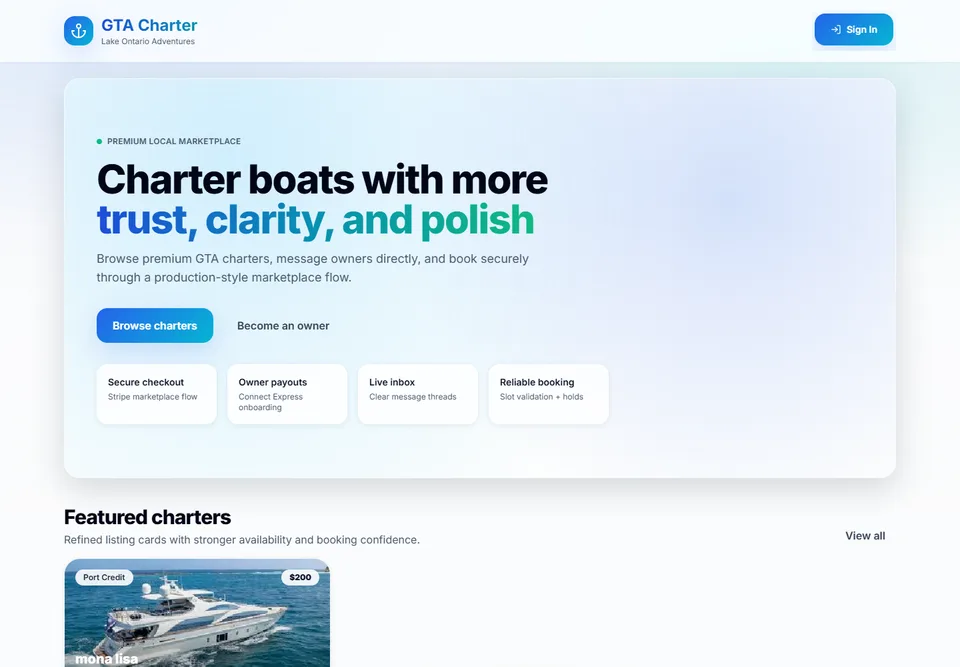
A full-stack marketplace for boat owners and passengers, with owner/passenger account flows, listings, booking logic, real-time messaging, media galleries, and Stripe Connect payout architecture.
Why it matters
Demonstrates marketplace architecture thinking: booking states, payment flows, webhooks, Firestore security rules, mobile polish, and product-level edge cases.
AI health workflow
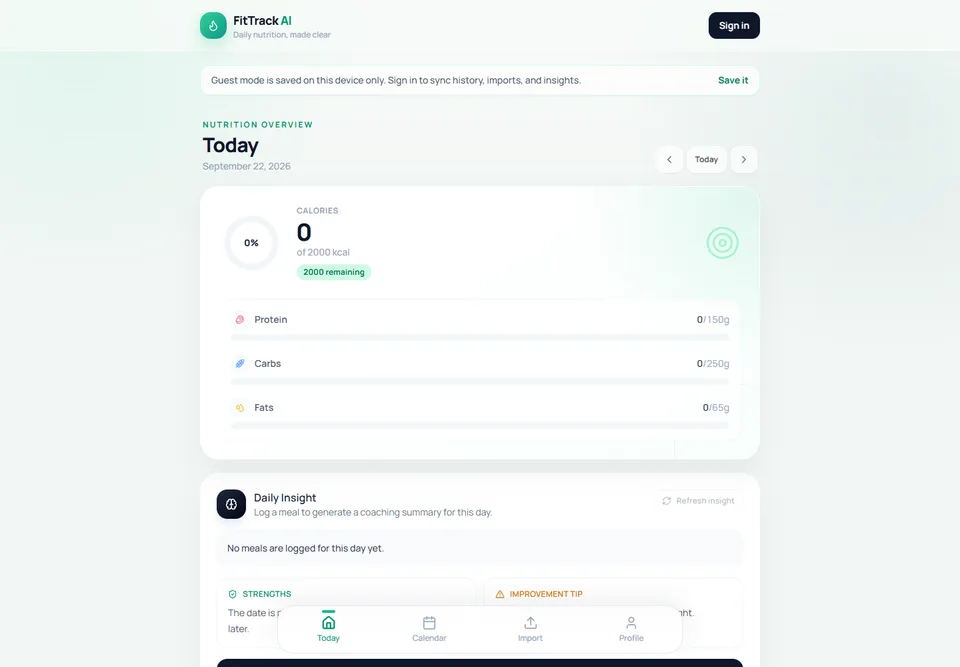
An AI-powered nutrition tracker that lets users log food in natural language and turns meals into calories, protein, carbs, and fat with daily totals, goals, CSV import/export, and feedback.
Why it matters
Highlights practical AI integration, nutrition parsing, serverless functions, persistent user data handling, performance work, and UX focused on quick daily use.
These cover the questions people usually ask before they open LinkedIn, schedule a call, or test the robot with something unexpected.
Read the full FAQWhat kind of work fits you best?
Frontend or full-stack product work where clean UI, practical systems, and user experience all matter. I am especially interested in junior or internship roles where I can build real features, learn quickly, and contribute to polished user-facing products.
What stands out about how you build?
I care about whether the product is actually useful, not just whether the feature technically exists. That shows up in clearer hierarchy, thoughtful flows, practical AI integration, and fewer rough edges between the idea and the real user experience.
How do you approach projects?
I start with the user workflow, choose a stack that fits the scope, then refine the interface and implementation until the product feels intentional. I try to keep the architecture simple enough to maintain and the UX clear enough to trust.
I am especially interested in internships, junior frontend roles, and product-focused teams that care about clear communication, useful UX, and shipping work that feels finished.